Aerothermal energy optimizes energy consumption and reduces greenhouse gas pollution.
Nowadays, when choosing a system to generate domestic hot water and heating, there are three clear objectives: to seek maximum energy efficiency to adjust consumption, to discard systems that use fossil fuels (at least within each house) and to contribute to the reduction of greenhouse gas emissions into the atmosphere. Currently, the system that meets all these characteristics is the aerothermal system.
What is aerothermal energy?
Aerothermal energy is an integral system capable of heating domestic hot water and providing heating and cooling to the home with a single unit. It achieves this by means of a heat pump, which extracts heat from the outside air (even if it is below zero) to heat or cool a coolant, which transfers the temperature obtained to the indoor water distribution system through a heat exchanger, which finally transmits the energy generated to the heating and domestic hot water circuit of the house.
Is aerothermal energy an efficient system for heating the house?
The most outstanding feature of the air-water heat pump is that the ‘fuel’ it uses is air: a natural and free source. It is therefore considered a renewable and sustainable energy system, whose use is recommended by the European Union and included as a renewable source in the Technical Building Code.
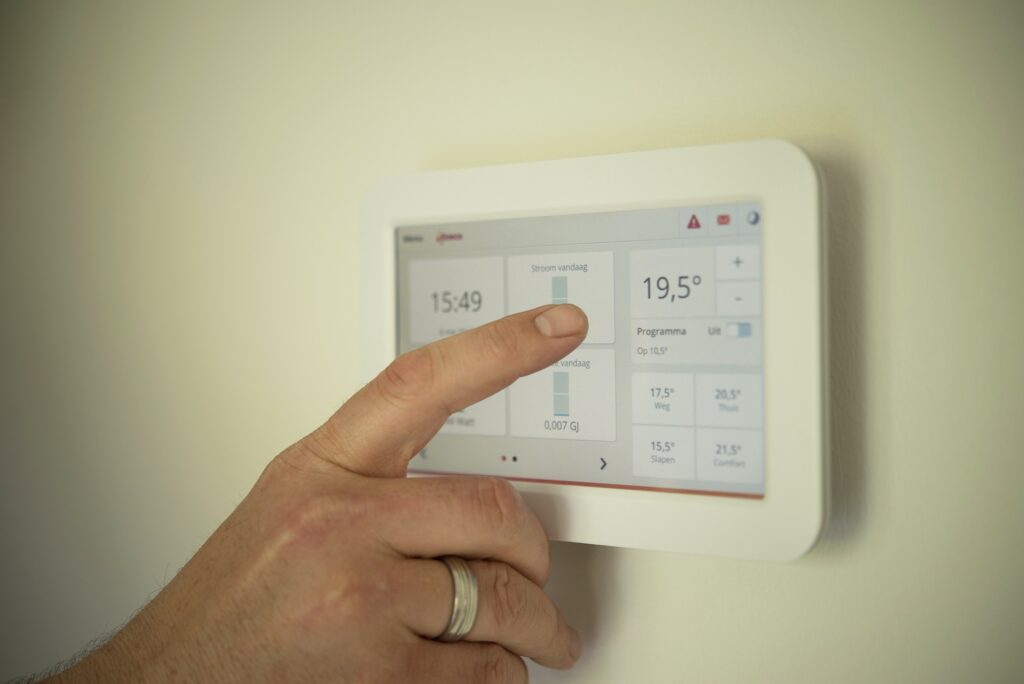
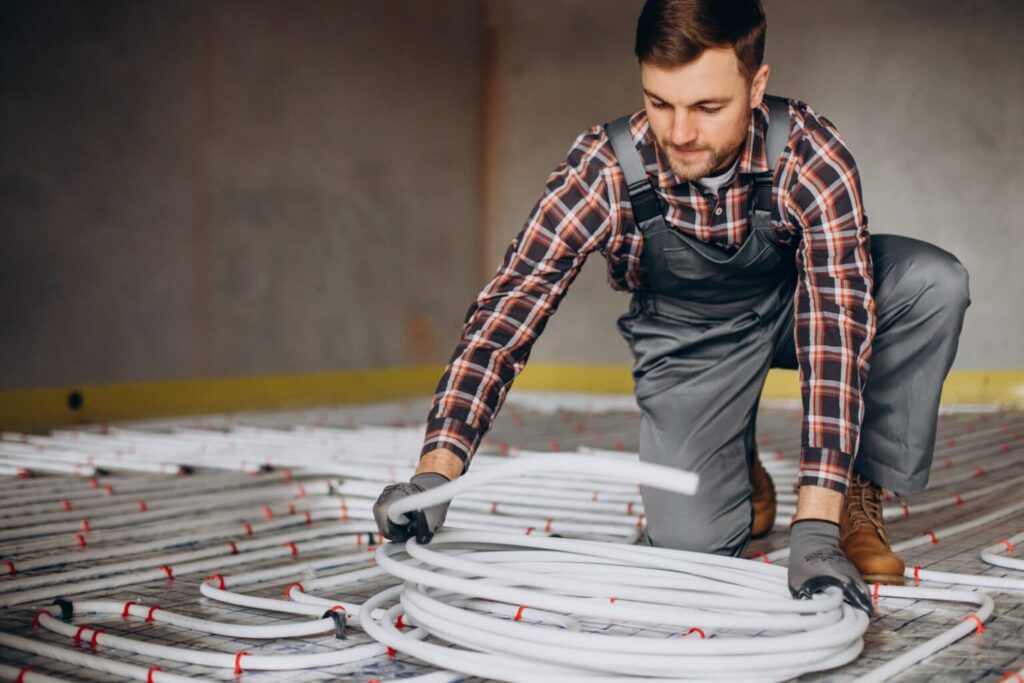
In addition, about 75% of the energy obtained is free of charge. This is explained by its COP work coefficient (an index that establishes the required electrical consumption). We recommend using it together with underfloor heating.
Is it expensive to install aerothermal energy and when is it cost-effective?
Probably the main disadvantage of aerothermal energy is that it involves a high initial installation cost, compared, for example, with a gas condensing boiler. Its advantage lies in the fact that, being such an efficient system, less is spent on consumption and increases in the price of energy have less impact.
However, for the investment to be profitable, it is recommended to install this system in homes from 90 square meters, since with low consumption it is more difficult to amortize the high cost of installation.
The perfect combination is air-water aerothermal with underfloor heating, which achieves savings of around 40 % per year.
If this comparison is made between energy sources, the savings would be 25 % with gas and 50 % with diesel.
Aerothermal energy: a reliable source of energy
In any case, it is not only necessary to think about economics. It is important to note that, by installing aerothermal energy, a dangerous fuel tank or gas pipes are avoided. There will also be no flues, no waste, no odors and, therefore, domestic environmental pollution is eliminated. Some models are also prepared to be powered by the energy generated by a photovoltaic installation, thus reducing electrical dependence.
Types of aerothermal equipment: monobloc and split units
There are monobloc or split units, which are the most commonly used and can be chosen with or without a built-in hydraulic unit. The compact tower type units, all-in-one, occupy the space of a refrigerator. Another point to consider is the noise level, which many brands have reduced considerably.the compressor, or monoblock units, is installed outdoors: for example, on a balcony, in the garden or on the roof of the building.
Some split models can be spaced up to 40 m apart between outdoor and indoor units. It is ideal for renovation works and when there is no access to other energy sources. It is also used to replace high temperature systems or to combine with existing boilers.
Currently, aerothermal energy is gaining ground not only in new construction and individual renovations, but also in housing blocks where it is also combined with photovoltaic panels.
Source: Houzz